How much do custom boxes cost, and what actually drives the number
The price of a custom box is set by six things: board, print method, finishes, tooling, quantity and freight. Board and quantity move the number most. We do not publish prices because every box is made to a size, but a quote takes one email with dimensions and quantity and usually comes back within one business day.
Board comes first
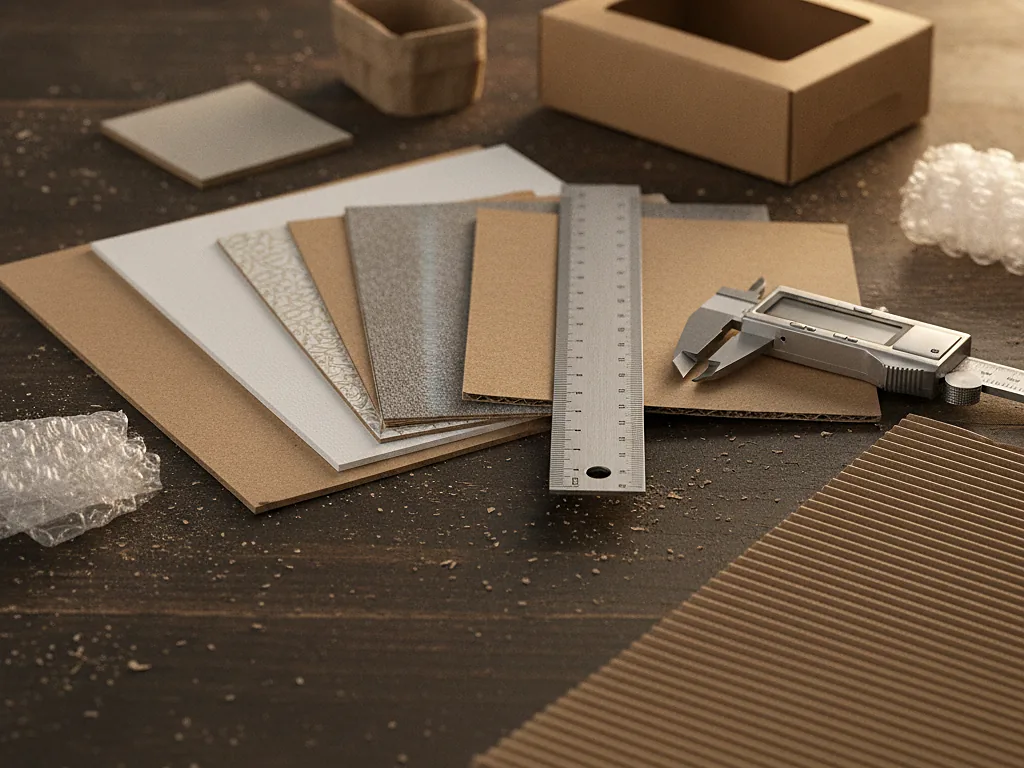
Board is bought by the sheet and cut by area, so the size of your box sets the base before anything is printed on it. A 6 by 6 by 4 inch mailer uses roughly half the E-flute of a 10 by 8 by 4, and the number follows. Within a family, the caliper matters next. 18pt SBS is the working standard for cartons, 24pt is stiffer and heavier, and 1200 gsm grayboard for a rigid box is a different order of material again, because it is wrapped rather than printed.
The part people miss is yield. A carton blank that fits twelve to a 28 by 40 inch sheet is cheaper per unit than one that fits nine, even when the finished boxes look almost the same size. We check the layout on every quote and will suggest trimming a quarter inch from a dimension where it gains a row. It rarely changes the fit and it often changes the number.
Print method and color count
One color flexo on kraft is the cheapest print there is, because the plate is simple and the ink is water-based. Full color digital has no plates at all, which is why it works at 200 units, but the per-sheet rate stays flat as quantity rises. Offset CMYK needs four plates and a make-ready, so it costs more to start and less per sheet after a few hundred. Inside print is a second pass on a mailer, as on our inside printed mailer box, and adds to the number in proportion.
Pantone spot colors on offset add a plate each. Metallic inks add a plate and a slower run. On digital, a Pantone reference is matched from CMYK as closely as the gamut allows, which is fine for most brand colors and not fine for some oranges and deep blues. We tell you on the proof which it is, and if the color is the brand, we will say so and suggest offset even at a lower quantity than we normally would.
Finishes and tooling
Every finish is a separate pass through a separate machine. Matte aqueous coating is applied in line with the print and costs the least. Soft-touch and gloss lamination are a film bonded to the printed sheet. Foil, blind deboss and spot UV each need their own pass and, for foil and deboss, their own die. Stack three finishes on a carton and you pay for three passes, so we ask which one earns its place.
Tooling is the one-time part. A cutting die for a new size, a foil die, an emboss plate. These are paid once and sit on the shelf for your reorders, which is why a second run of the same box usually costs less per unit than the first. If your size is close to one we already have a die for, we say so on the quote, because using an existing die takes the tooling line off entirely.
What moves the number, and how
| Driver | One-time or per unit | What to do about it |
|---|---|---|
| Board and size | Per unit | Trim to improve sheet yield |
| Print method | Plates one-time, ink per unit | Digital under a few hundred, offset above |
| Finishes | Per unit, plus die for foil or deboss | Pick one finish that earns its place |
| Tooling | One-time | Reuse a standard size where it fits |
| Quantity | Per unit falls as it rises | Ask for two or three quantity breaks |
| Freight | Per shipment | Ship flat, ship to one address |
An illustrative spec: two versions of one mailer
Illustrative spec, not a client order.
Say a candle brand needs an 8 by 6 by 3 inch mailer for 250 units. Version one is a natural kraft mailer box, one color flexo on the lid, no insert. Version two is the same box with full color inside and out, a die-cut E-flute cradle and a soft-touch effect on the lid. Same size, same quantity, and the second version quotes far higher, because it carries a second print pass, an insert and a finish that each add to every unit.
The middle version is the one we would suggest: one color outside, full color inside, and the cradle. The cradle stays, as on our candle shipper box, because a jar that arrives cracked costs more than any box. The lamination goes because a mailer is opened once and put in the recycling. For anything that ships rather than sits on a shelf, that is usually the right trade.
How to get a quote fast
Send five things in one email: inside dimensions in inches, quantity or two quantities, the board you have in mind or the product going in it, the print you want in plain words, and the zip code it ships to. Artwork can come later. With those five, the quote and dieline usually come back within one business day, and the digital proof follows at no charge, usually within one business day of your artwork. A photo of the product beside a coin is a fair substitute for dimensions if you have not measured yet.
Questions people ask
Why do you not publish a price list?
Because there is no standard box. Two mailers that look alike can differ in board, size, yield and print, and a list price would be wrong for most of them. A quote from real dimensions and a real quantity is accurate, and it usually comes back within one business day.
Does ordering 400 instead of 200 halve the per-unit number?
No, but it moves it a long way. The tooling and set-up are spread over twice as many units, so the per-unit figure drops sharply between 200 and 500 and then flattens. We quote two or three quantities so you can see where the curve bends for your box.
Is a reorder cheaper than the first run?
Usually, yes, per unit. Reorders carry the same minimum as the first run; the saving is time, since the artwork and dieline are already approved. One-time tooling from the first order, such as a cutting die or a foil die, is not charged again. Production takes the same lead time as the first run, as stated on the product page.