Pouch material selection: foil, metallized, clear and kraft films
A pouch film is a laminate: a printed outer layer, sometimes a barrier layer in the middle, and a PE layer inside that heat seals. Choose foil (PET, aluminum, PE) when oxygen, moisture, light or odor must be kept out for months; metallized PET when you want a strong barrier at lower weight; clear or matte PET/PE for dry products that turn over quickly; and kraft/PE for a natural look on short-shelf-life goods.
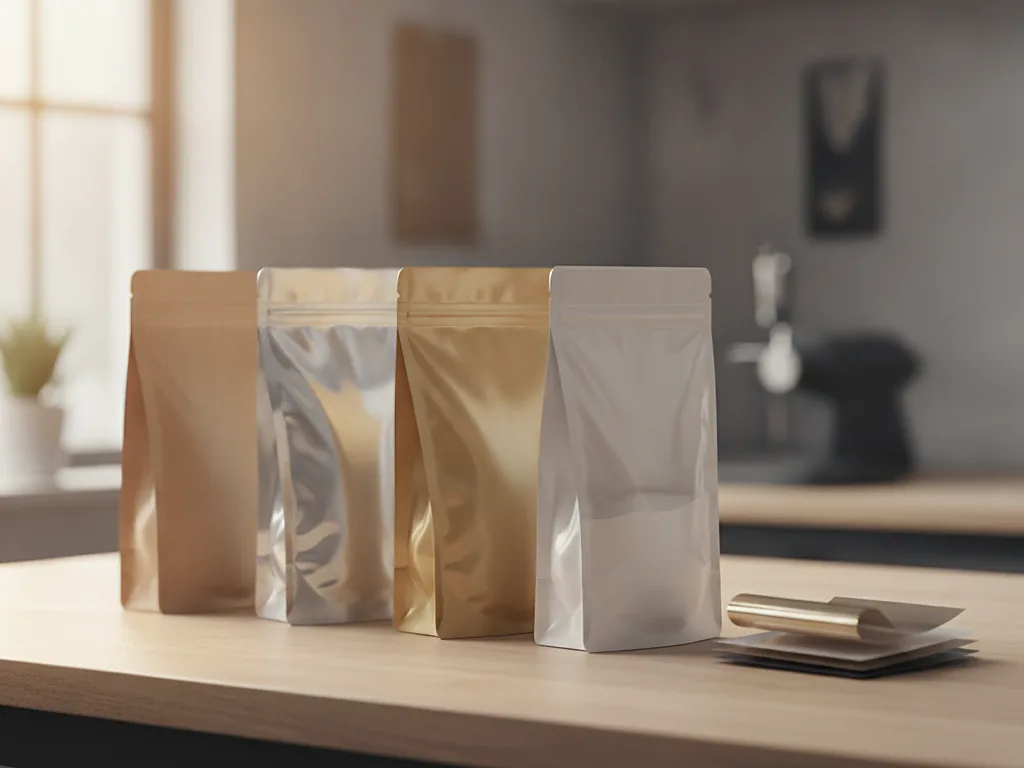
How a laminate works
No single plastic does everything a pouch needs. The outer layer, usually PET, takes the print and resists scuffs and punctures. The inner layer, PE, is the food-contact surface and the one that melts to make the seals. When the product needs protection, a barrier layer goes between them: solid aluminum foil, or a PET film with a vapor-deposited metal coating. Every film we run for pouches is food-contact grade, with documentation supplied with the quote.
The films we run, compared
| Film | Oxygen and moisture | Light and odor | Window | Typical products |
|---|---|---|---|---|
| Foil laminate (PET / aluminum / PE, or kraft / aluminum / PE) | Highest barrier we offer | Blocks both | No; a window breaks the foil | Roasted coffee, supplements, cannabis, freeze-dried food |
| Metallized PET / PE | High, a step below foil | Blocks most light; reduces odor | Possible, unprotected in the window | Oily snacks, granola, nuts, delicate teas |
| Matte barrier laminate (matte PET / PE) | Moderate | Limited | Yes | Tea, bath salts, pet treats, dry snacks |
| Clear PET / PE | Moderate | None through the film | The whole bag can be clear | Dry snacks, candy, crackers |
| Kraft PE laminate | Moisture fair, oxygen limited | Opaque, little odor barrier | Yes | Tea, herbs, granola, quick-turnover goods |
We do not run EVOH clear barrier films or nylon laminates for our printed pouches. If a product needs a clear bag with a foil-level oxygen barrier, the honest answer is that clear films do not get there; a foil bag with a printed photograph of the product usually does the job better.
Foil laminate
A continuous layer of aluminum foil, bonded between PET and PE, is close to impermeable to oxygen, moisture, light and odor. It is what our supplement pouch and smell proof mylar bag are built on, and the standard for roasted coffee. The trade-off is that it is fully opaque, and it is the heaviest of the films. For coffee, the foil can sit under a kraft outer, so the bag looks natural and still protects like foil.
Metallized film
Metallized PET carries a coating of aluminum many times thinner than foil, deposited in a vacuum. It looks similar and blocks most light, but it lets more oxygen and moisture through, and more again after the bag has been flexed in shipping. It suits snacks with oil in them, nuts and granola, where a window of a few months matters and the metallic look is part of the design. It reduces odor; it does not stop it.
Clear and matte PET / PE
The everyday pouch films. They protect dry products that are eaten within a few months, print beautifully, and can show the product through a window or the whole bag. Our stand up pouch runs on these films by default, with foil available for coffee and supplements.
Kraft PE laminate
Natural kraft paper on a PE seal layer. It gives the brown, natural look many food and tea brands want, holds moisture out reasonably well and passes oxygen fairly freely. Use it for products that are sold and eaten quickly. Kraft also mutes color: photographs and bright colors look duller than on white film, so design for it.
How to choose in three questions
- How long must it stay fresh, and what spoils it? Oxygen spoils fats and coffee; moisture spoils crisp and powdered products; light fades color and oils. Months of protection against any of those point to foil.
- Must the product be seen? If yes, you are choosing between clear, matte or metallized film with a window. Accept the shorter shelf life or print the product instead.
- What should it look and feel like? Kraft for natural, matte for modern, gloss or metallized for bright.
For snack-by-snack recommendations, see the snack pouch barrier guide.
Questions people ask
What is the difference between foil laminate and metallized film?
Foil laminate has a real layer of aluminum foil and blocks oxygen, moisture, light and odor almost completely. Metallized film is PET with a very thin vacuum-deposited aluminum coating. It looks similar but passes more oxygen and moisture, especially after flexing.
Do all pouches need a barrier layer?
No. Dry products that sell within a few months, such as tea, bath salts, pet treats and crackers, do well on a matte or clear PET/PE laminate. Foil is for products that must last for months or that spoil quickly with oxygen or moisture.
Do you offer clear high-barrier films such as EVOH?
Not for our printed pouches. Our clear and matte films are PET/PE. If a product needs a foil-level barrier, we recommend the foil laminate and print the product photograph on the bag.
What material is best for coffee bags?
A foil laminate with a one-way degassing valve. It can be PET, foil and PE with a matte finish, or kraft, foil and PE for a natural look. Metallized film with a valve suits roasters who sell fast, but it lets more oxygen in.
How is this guide different from the snack pouch barrier guide?
This guide explains the films themselves: what each layer does and which products each one suits. The snack pouch barrier guide applies that to snacks one by one, from chips and nuts to crackers and freeze-dried fruit.