Product label materials: how to choose the stock, adhesive and finish
A product label is three decisions: the face stock, the adhesive and the finish. Our roll labels are matte art paper with a permanent adhesive, or a wet-strength adhesive where the container gets wet, finished matte or with a gloss lamination; vinyl is available on our sticker and label sheets for anything that meets water constantly. Start with what the label has to survive, then pick the simplest build that survives it.
What we print labels on, and what we do not
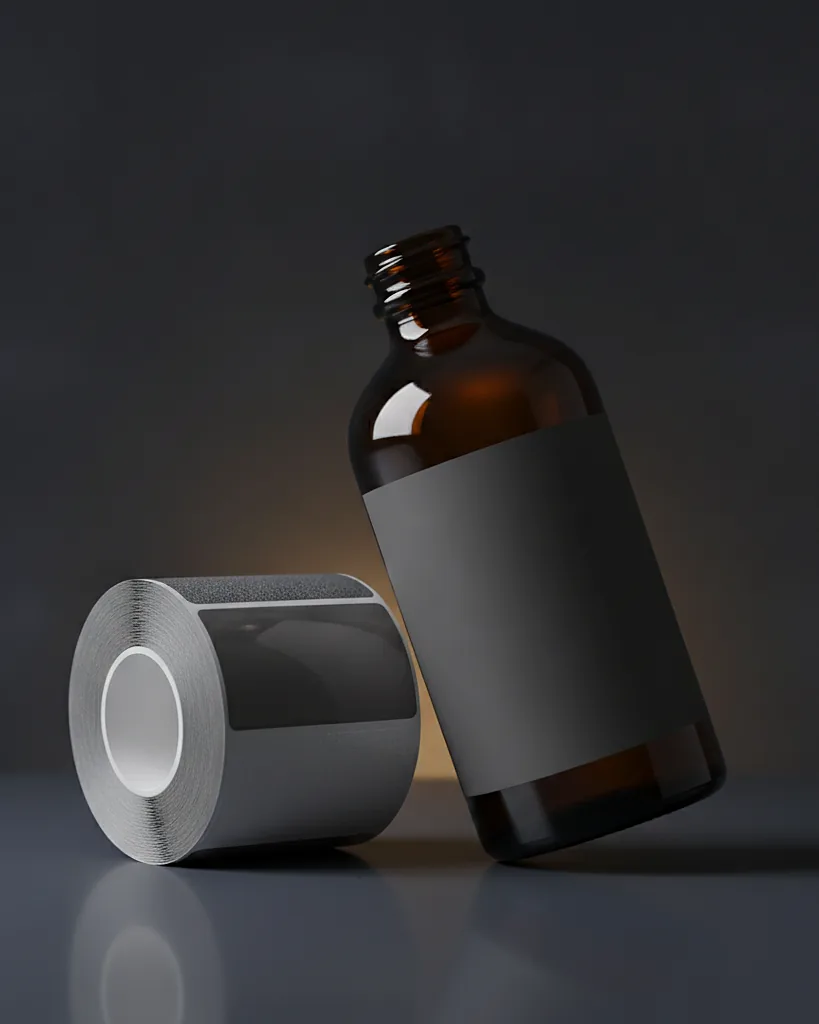
Every roll label we make starts from matte art paper: a smooth coated paper that takes digital CMYK cleanly and holds fine type. That covers product labels, jar labels, bottle, candle, nutrition and beer labels. What changes from one to the next is the adhesive and the finish on top.
For a label that lives in water, oil or a dishwasher, the answer is vinyl, and we print white or clear vinyl on our sticker and label sheets with a gloss or matte laminate. Our die-cut stickers are laminated paper, not vinyl, and we say so on that page.
We do not offer BOPP, polyester or metallized film label stocks. If an existing spec sheet calls for one, tell us what the label actually has to survive. Often a laminated paper label or vinyl does the job; when it does not, we will say so rather than sell you the wrong label.
Match the build to the exposure
| What the label faces | Build we recommend | Where to start |
|---|---|---|
| Dry shelf: cartons, pantry jars, gift boxes | Matte art paper, permanent adhesive, matte finish | Product labels |
| Sticky or oily handling: sauces, oils, honey | Matte art paper with gloss lamination so it wipes clean | Hot sauce or honey labels |
| Fridge condensation, ice buckets, coolers | Wet-strength adhesive plus gloss lamination | Beer or can labels |
| Fridge and freezer food packs | Gloss-laminated stock | Nutrition labels |
| Warm candle glass or tins | Adhesive chosen to hold near sustained warmth | Candle labels |
| Dishwasher, submersion, bath products | White or clear vinyl with laminate | Sticker and label sheets |
| Tapered, ridged or shouldered containers | Not a flat label: a shrink sleeve | Shrink sleeves |
Adhesive
Permanent adhesive is the default and the right choice for nearly every product label. Wet-strength adhesive is the upgrade for anything that sweats in a fridge or sits in ice. Removable adhesive is available on sticker and label sheets for things like seals on reusable containers.
The most common adhesive failure we see is not the adhesive at all. It is application: labels pressed onto a cold, damp or oily container never bond properly. Apply to a clean, dry container at room temperature, then let the label sit for a day before it goes cold.
Finish
Matte is the standard and reads quiet and premium. Gloss lamination makes color pop and gives a surface you can wipe, which is why it goes on anything handled with wet or sticky hands and on nutrition labels for fridge and freezer packs. Soft-touch lamination is available on die-cut stickers, foil accents on candle, beer, can, honey and hot sauce labels, and spot UV on product labels. Each finish adds a pass, so add one only for a reason.
Roll or sheet
Roll labels are for applying at volume: by hand from the roll, with a hand applicator or on a labeling line. Tell us the core size and wind direction, or the machine make and model, and we wind to suit. Sheets suit hand application in small batches. Roll labels start at 200 units and ship 5 to 7 business days after proof; sticker and label sheets start at 200 and take 10 to 12.
Questions people ask
Do you print BOPP or polyester labels?
No. Our roll labels are matte art paper with a permanent or wet-strength adhesive and a matte or gloss finish, and we print white or clear vinyl on sticker and label sheets. If your spec calls for BOPP or polyester, tell us what the label must survive and we will say honestly whether one of our builds does the job.
What is the most durable label you make?
For constant water, oil or a dishwasher, white or clear vinyl with a laminate, on our sticker and label sheets. For bottles that see fridges and ice buckets, a matte art paper label with a wet-strength adhesive and gloss lamination, which is how our beer and can labels are built.
Matte or gloss lamination: which should I choose?
Choose matte for a quiet, premium look on a dry shelf. Choose gloss lamination when the label will be handled wet or sticky, goes in a fridge, or carries photography that needs saturated color, because gloss wipes clean and resists moisture better.
Can labels carry a lot number or date that changes each batch?
Yes. Variable data printing for lot codes, batch numbers and dates is available on our product and bottle labels. Tell us how much of the label changes from run to run and we will confirm the minimum and lead time for your schedule.
Should I read the waterproof bottle label guide instead?
Read the waterproof bottle label guide if your specific problem is condensation, ice or water on a bottle, because it covers testing and application in more depth. This guide is the overview of every label build. For curved or ridged containers, read shrink sleeve vs pressure-sensitive label first.