Shrink sleeve vs pressure-sensitive label: which one your container needs
Use a pressure-sensitive label when the container is a straight or gently tapered cylinder and you want the fastest, simplest route to shelf: Tria labels start at 200 units and ship 5 to 7 business days after proof. Use a shrink sleeve when the shape is curved, ridged or has a pronounced shoulder, or when you want print from base to neck; our sleeves run on PVC-free film from 500 units in 8 to 10 business days, and you need a heat tunnel or a co-packer to apply them.
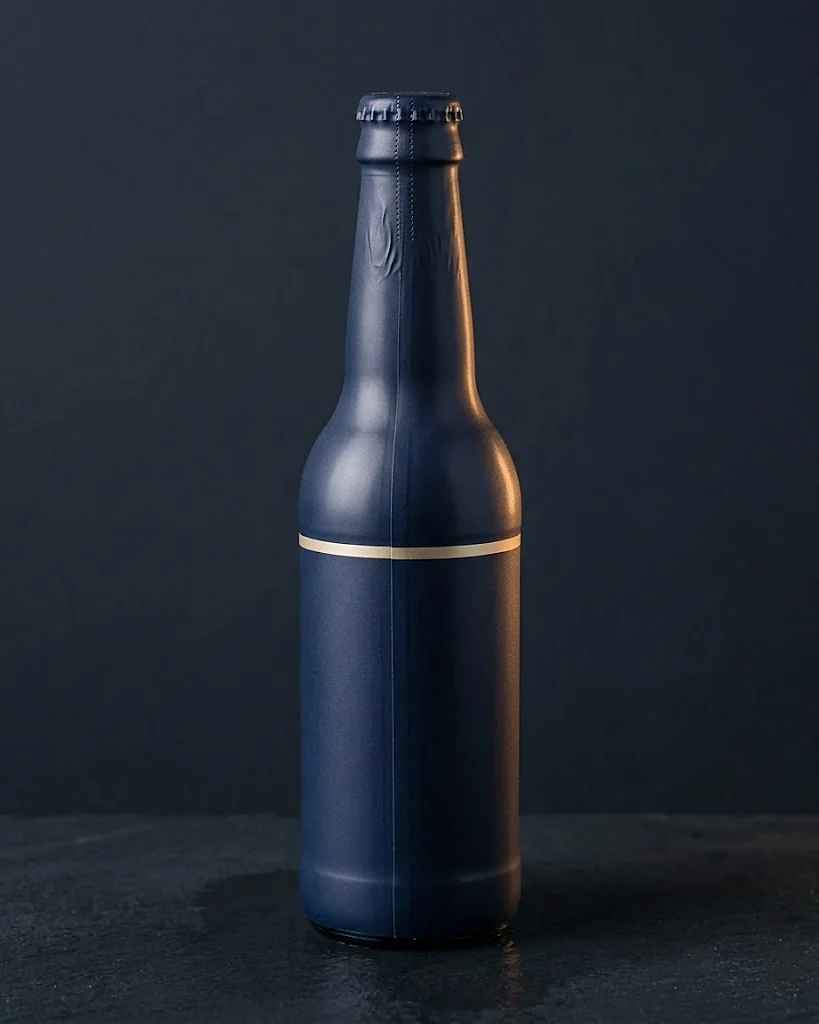
How each one works
A pressure-sensitive label is printed on a face stock, backed with adhesive and wound on a roll. Ours are matte art paper with a permanent adhesive, finished matte or with a gloss lamination, and the beer and can labels add a wet-strength adhesive for ice and condensation. You or your packer apply them by hand, with a hand applicator or on a labeling line; we wind the roll to suit the machine.
A shrink sleeve is a tube of printed film. It is printed flat on the inside face so the ink sits under the film, seamed into a tube, slid over the container and run through a heat tunnel or steam tunnel, where it shrinks onto every curve. Our shrink sleeves print up to eight colors by rotogravure or digitally, with full 360-degree coverage or a partial neck band.
Side-by-side comparison
| Pressure-sensitive label | Shrink sleeve | |
|---|---|---|
| Container shapes | Straight cylinders, flat panels, gentle tapers | Tapers, shoulders, ridges, hourglass and narrow necks |
| Coverage | Front panel, back panel or full wrap of the straight body | Base to neck, 360 degrees, optionally over the cap as a tamper band |
| Tria minimum | 200 units | 500 units |
| Tria lead time | 5 to 7 business days after proof | 8 to 10 business days after proof |
| Application | By hand, hand applicator or labeling line | Heat tunnel or steam shrink; a co-packer if you have neither |
| Digital CMYK, offset above 5,000 units, foil accents on some lines | Up to eight color rotogravure or digital, printed under the film | |
| Scuff and moisture | Good with gloss lamination; wet-strength adhesive for ice | Very good, because the ink is protected by the film |
| Artwork | Flat artwork, wrap seam to plan | Must be distorted to allow for uneven shrink |
Shape decides most of it
Hold the container and roll it on a table. If it rolls straight, a flat label will sit flat. If it wobbles in an arc, the label is being asked to wrap a cone, and the edges will flag or wrinkle once the taper passes a few degrees. Our bottle labels handle a gentle taper well; a woozy hot sauce bottle, a bulbous jar shoulder or a ridged grip panel is sleeve territory.
Sleeves have their own artwork rule. The film shrinks more where the container narrows, so the art is pre-distorted to land correctly after shrinking. Keep barcodes, nutrition panels and small type on the straight part of the body, where shrink is lowest, and keep anything critical out of the neck. We plan this on the dieline before the proof.
Run size, versions and timing
At 200 units with a 5 to 7 day turnaround, labels are the easier tool for testing flavors, seasonal runs and lot-coded batches; variable data such as lot numbers and dates is available. A sleeve starts at 500 and needs a printed sample sleeve tested on your real container before the full run, which we treat as standard. If you have several flavors on one bottle, a label change is a new roll; whether several sleeve designs share one minimum is confirmed on the quote.
Cost follows the same logic, without us putting numbers on a page that would be out of date by the time you read it. A sleeve uses more material and needs a shrink step on your line, so it costs more per unit than a front label on the same bottle. It earns that back only when the shape or the full-coverage look genuinely needs it. A quote at two or three quantities shows you where the curve flattens.
Recycling: what the film choice changes
On a PET bottle the sleeve film matters to the recycler. The Association of Plastic Recyclers' PET design guidance prefers film labels that float in the wash tank, because they separate from PET flake, which sinks. PVC and PLA sleeves sink with the PET and are classed as rendering the package non-recyclable. Standard PETG also sinks, which is why APR only accepts PET-based sleeves when they meet specific perforation and thickness criteria so they can be removed. Paper labels on PET are classed as detrimental rather than preferred.
We run sleeves on PVC-free film. If APR recognition or a recyclable claim matters for your bottle, tell us at the quote stage and we will confirm the exact film your quote is based on before anything is printed.
What we would choose
For a straight jar of honey or a cylindrical sauce bottle: a front label with a gloss lamination, from our hot sauce label line if it will be handled with sticky fingers. For a tapered spirits or kombucha bottle where the brand wants the whole surface: a full-body sleeve. For a plain product bottle that runs through a labeling line, a roll-fed product label wound to your applicator is the cheapest, fastest answer.
Questions people ask
Is a shrink sleeve more expensive than a pressure-sensitive label?
Yes, per unit. A sleeve uses more film, prints the full surface and needs a heat or steam shrink step, and our sleeve minimum is 500 units against 200 for labels. It is worth the extra only when the container shape or the full-coverage look needs it. We can quote both on the same bottle so you see the real difference at your quantity.
Can we apply shrink sleeves without a heat tunnel?
Not for a production run. A heat gun will shrink a sample to check fit, but it gives uneven results across hundreds of units. You need a heat tunnel or steam shrink applicator, or a co-packer who offers sleeve application. Labels, by contrast, go on by hand or with a simple hand applicator.
Do shrink sleeves stop a PET bottle being recycled?
They can. APR design guidance prefers floating film labels, classes PVC and PLA sleeves as making a PET bottle non-recyclable, and accepts PET-based sleeves only with specific perforations. We run PVC-free film and confirm the exact film on your quote if a recyclable claim matters.
Will a paper label survive an ice bucket?
Ours will when it is built for it. Our beer and can labels use a wet-strength adhesive and a gloss lamination, which stops condensation wicking into the paper and lifting the edges. Apply them to a dry bottle at room temperature, before it goes cold, and let the adhesive settle.
I have already chosen a flat label. Which guide should I read next?
Read our product label materials guide for the stock, adhesive and finish choice. If the bottle will be iced or wet, go straight to the waterproof bottle label guide instead. This guide only covers the label versus sleeve decision.