What is glassine paper and when you actually need it
Glassine is a dense, smooth, semi-transparent paper made by super-calendering pulp until the fibers collapse and lock together, which gives it some resistance to grease and moisture without a coating. It is used for bakery bag liners, small-parts envelopes and interleaving sheets. We do not stock or print it, and a branded package that needs grease resistance is usually better served by a coated carton or a laminate pouch.
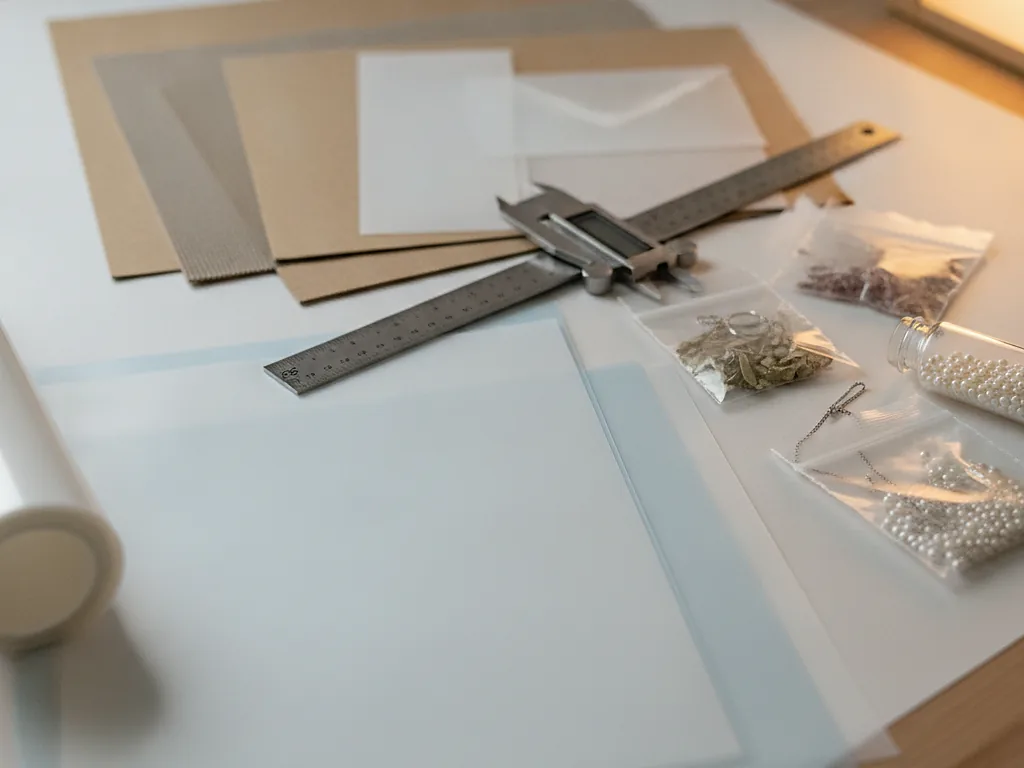
What glassine actually is
The calendering is what separates glassine from ordinary paper, not the fiber itself. Regular paper stays porous, so air and moisture move through it. Glassine's fibers get pressed so tight the sheet becomes almost non-porous, which is why light passes through it in a translucent, slightly greasy-looking way and why it resists a spot of oil or butter for a while. It is not waterproof or fully greaseproof; it slows both down. Given enough time or grease, it lets it through.
Basis weight for glassine typically runs 20 to 40 lb (about 30 to 60 gsm), thinner than the folding carton board these boxes use and much thinner than anything with real structural rigidity. It's a converting material, a sheet or a bag, not a structural one. Nobody builds a self-supporting box out of glassine, because it has no stiffness to speak of.
Where it's actually used
Bakeries use glassine bags for a single donut, cookie, or pastry sold loose, where a customer needs to see the product and the counter person needs a quick grab-and-go wrap that won't leave an oil stain on their hand. Small-parts and jewelry supply houses use glassine envelopes to separate loose stones, findings, or coins without scratching them, since the smooth surface doesn't catch on anything. Stamp and coin collectors use it for the same reason, non-abrasive and inert against the surface it's protecting. Photo labs historically used it to interleave negatives.
None of those uses involve printing, branding, or a custom structure, which is the reason it sits outside what a custom packaging company normally supplies. It's closer to a raw material a converter buys in bulk and cuts down, the same category as basic kraft paper or bubble wrap, not a product a brand designs and prints.
Why we don't sell it, and what actually solves the problem
Two separate things get searched under "glassine" and they need two different answers. If you genuinely need plain, unprinted glassine sheets or bags at volume, a paper distributor or a bag converter that runs commodity paper will price it lower than we ever could, because that's their whole business and it's a raw-material margin, not a custom-print margin. We'd be marking up someone else's commodity product for no reason.
If what you actually need is grease or moisture resistance on a branded, printed package, glassine usually isn't the real answer even when it's the term that comes to mind. A bakery item that needs a window and holds up against butter or oil is better served by a folding carton with a grease-resistant coating, sized and detailed the way our bakery boxes guide lays out. A product that needs a fully sealed, grease-resistant pouch, think a bar, a wrapped snack, or a cosmetic sample, is better served by a kraft-PE laminate or matte-barrier-laminate pouch, since the seal comes from heat-welding the PE layer shut, not from paper density alone. Either route gets you a printed, branded package that actually holds up, instead of an unbranded commodity sheet that only slows a stain down.
A quick way to tell which one you need
If the finished piece needs your logo, a color or any printed information on it, you are not looking for glassine. You are looking for a printed carton or pouch with the right barrier built in. If the piece is meant to be invisible, a plain interleaving sheet or a loose bag with nothing printed on it, that is the real glassine use case, and it is worth a call to a paper distributor rather than a custom shop.
| What you need | Glassine? | What we would use instead |
|---|---|---|
| Plain liner under pastries in a box | Fine, buy it from a paper distributor | Or a grease-resistant coating inside a bakery box with a window |
| Branded bag for a single cookie or pastry | Possible, but not from us | A printed bakery bag or cookie bag |
| Branded wrap around a soap or a gift | No | Soap wrapping paper or printed tissue paper |
| Sealed, grease-resistant pouch | No; it cannot be heat sealed | A kraft-PE or matte barrier laminate pouch |
| Interleaving sheets for jewelry, stamps or prints | Yes | Buy it plain from a paper distributor |
Questions people ask
Does Tria sell glassine paper or glassine bags?
No, not as a stocked commodity item. We're a custom packaging company: boxes, mailers, pouches, tubes and labels, printed to your artwork. Plain glassine sheets or glassine bags with no printing are a paper-mill commodity product, and you'll get a better price buying them direct from a paper distributor than from a custom print shop.
Can you print on glassine?
Not through us. Glassine's glazed, low-absorbency surface needs specialized flexo or gravure printing, which is not something we offer. If you need a printed grease-resistant wrap, printed tissue paper or a kraft-PE laminate pouch is what we'd suggest instead.
What should I use instead if my product is greasy or oily?
Depends on the product. A bakery item that needs a window and some grease resistance usually goes in a folding carton with a grease-resistant coating or a laminate liner, not loose glassine; see the bakery boxes guide. A product that needs a sealed, grease-resistant pouch is better served by a kraft-PE laminate or matte-barrier-laminate pouch, since those are heat-sealed and don't rely on the paper's glaze alone.