Soft-touch vs matte vs gloss lamination, side by side
Soft-touch lamination feels like velvet, deepens dark colors and marks easily. Matte lamination is flat, quiet and the most forgiving of the three. Gloss lamination is bright, tough and shows fingerprints. All three are a thin plastic film bonded over the print. For a carton that is opened once, a matte aqueous coating often does the job for less.
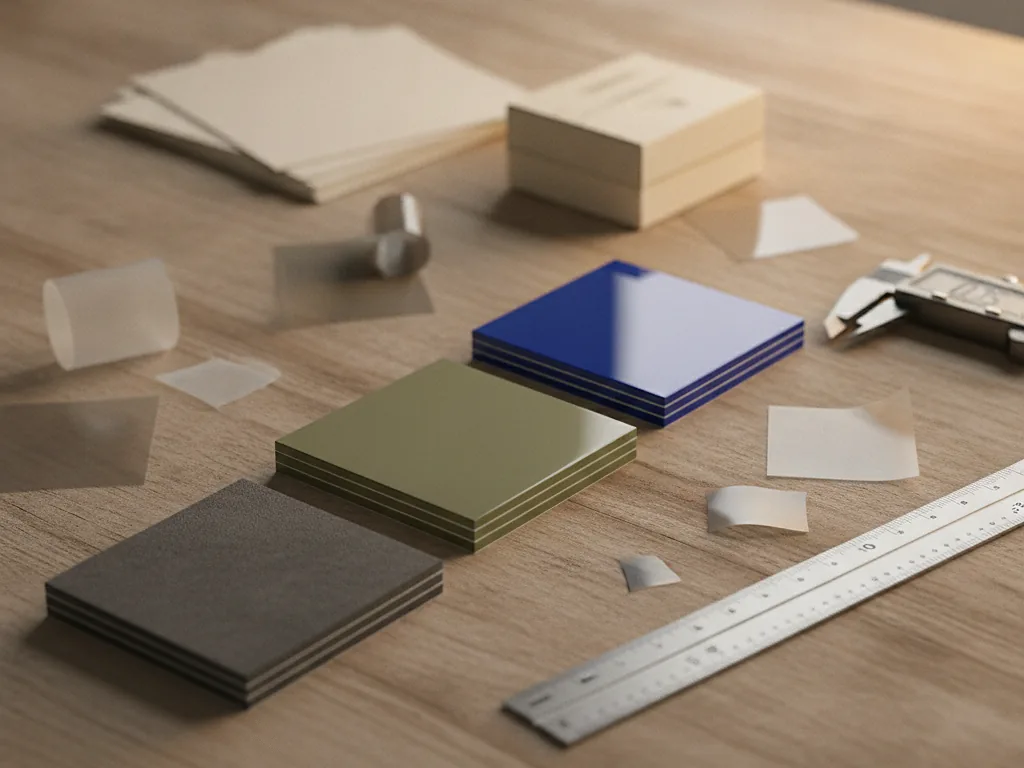
What lamination actually is
Lamination is a clear film, usually BOPP between 1 and 1.5 mil thick, bonded to the printed sheet with heat and adhesive before it is die-cut. It seals the ink, stiffens the board slightly and gives the surface its finish. Gloss film is clear and smooth. Matte film has a fine texture that scatters light. Soft-touch is a matte film with a coating that gives it the velvet feel, and it is the thickest and most expensive of the three. All of them are applied on one side, so the inside of the carton stays raw board unless you ask otherwise.
A coating is different. Matte aqueous coating, or its gloss version, is a water-based varnish applied in line on the press. It is thinner, cheaper and less protective than a film, and it keeps the carton recyclable as mixed paper, which a laminated carton may not be depending on the facility. It suits most mailers and cartons that go inside another box; film suits cartons that stand on a shelf or get handled in a store.
Side by side
| Soft-touch | Matte | Gloss | Matte aqueous | |
|---|---|---|---|---|
| Feel | Velvet, warm | Smooth, flat | Slick, cool | Paper |
| Color | Deepens darks | Slightly flattens | Brightens, saturates | Slightly flattens |
| Scuffing | Shows on darks | Resists well | Resists best | Scuffs on solids |
| Fingerprints | Shows on darks | Hides | Shows | Hides |
| Takes foil and spot UV | Yes, best contrast | Yes | Yes, low contrast | Foil yes, spot UV yes |
| Recyclable as mixed paper | Depends on facility | Depends on facility | Depends on facility | Yes |
Where each one earns its place
Soft-touch is for the box that gets held: skincare, fragrance, a tech accessory, a rigid box wrap. It is the finish people usually mean when they say premium, and against a black or deep navy it is hard to beat, especially with a foil logo or a spot UV pattern that catches light where the film does not. The trade-off is that it marks. A black soft-touch carton handled at a trade show looks tired by the afternoon. On white or pale colors the marking is barely visible and the feel is the same.
Matte lamination is the safe choice for a carton that will be handled and stacked, because it hides fingerprints and scuffs better than either of the others and still takes foil cleanly. Gloss is for photography-led artwork, food, and anything where color has to pop from a shelf. It is also the toughest film, so it suits a carton that gets wet hands on it. Gloss reads as everyday on cosmetics and as fresh on food, and that is worth knowing before you choose it.
An illustrative spec: one design, two finishes
Illustrative spec, not a client order.
Say a skincare brand needs 250 straight tuck end cartons at 2.25 by 2.25 by 5 inches on 18pt SBS, printed a solid deep green with a small foil logo, plus 500 sample-size cartons that go into mailers. Soft-touch looks richer in the hand and photographs darker. Matte hides fingerprints and costs less. We would suggest soft-touch for the retail carton and matte for the sample cartons, because the sample carton is opened once and thrown away and nobody holds it long enough to notice the velvet.
Put the expensive finish where the customer's hands will be, and the plain one where they will not. It also keeps a reorder simple, because the two cartons share an artwork file and the only line that changes between the two jobs is the finish. Both run on 18pt SBS, both can take the same foil die, and both ship flat, 10 to 14 business days after proof for a straight tuck end carton.
Things that go wrong
Lamination over a heavy solid can show tiny silver flecks where the film has not bonded, which is why solids belong on a smooth 18pt or 24pt SBS and not on a textured stock. Soft-touch over fine white type on a dark ground softens the edges slightly, so keep type above 7 point. Gloss over a photograph of a face will pick up glare under shop lights. Any film on the glue flap stops the glue from bonding, so the flap is masked before lamination, and it is one more reason to leave the flap unprinted.
If the carton is meant to be recycled by the customer and that claim is on the box, choose the aqueous coating. It is not as protective and it will not feel like velvet, but the claim will be true. We would rather print a carton that says nothing about recycling than one that makes a claim the film cannot back, and we will say so on the proof if the artwork and the finish disagree.
Questions people ask
Can I laminate the inside of the carton as well?
Yes, both sides can be laminated, and it is worth doing on a sleeve and tray carton or a carton with inside print that the customer will see and touch. It adds a second pass and slightly more stiffness. On a straight tuck end with a plain interior we would not bother.
Does soft-touch work on kraft board?
It can be applied, but the velvet feel is lost against the texture of kraft and the film dulls the natural color. On kraft we suggest an uncoated finish or a matte aqueous coating, and save soft-touch for a smooth white SBS or a rigid box wrap where the feel comes through.
Which finish holds up best in shipping?
Gloss, then matte, then soft-touch. All three protect the ink from rubbing far better than an uncoated sheet, and any of them will survive a mailer. If the carton ships loose in a shipping box with others, matte is the safest choice for a dark artwork and gloss for a light one.