Paperboard insert vs foam insert: which one your product needs
A die-cut paperboard insert is the right call for light products in a carton or rigid box, where the job is holding position and looking finished: it prints, recycles with the box and has no tool cost. A foam insert is the right call for glass, electronics and anything with a hard edge that must survive a drop, because closed-cell EVA or PE foam absorbs impact that paperboard only spreads. Both start at 200 units at Tria; paperboard takes 10 to 12 business days after proof and foam 10 to 14.
How each one works
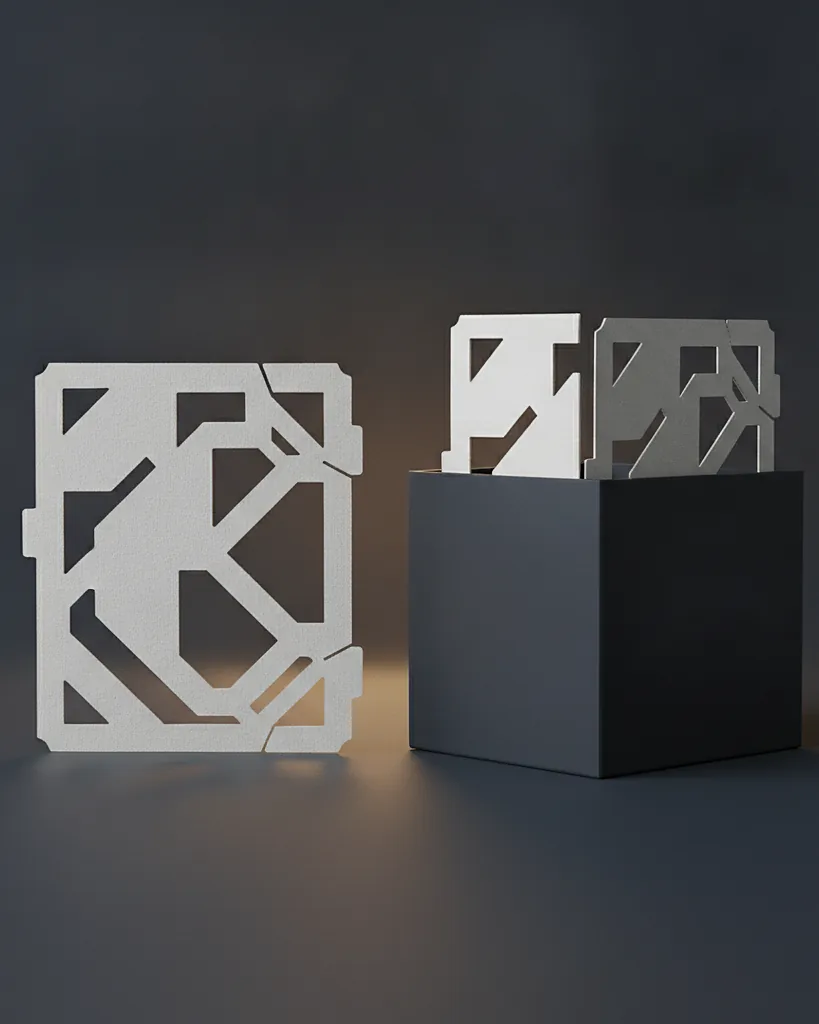
A die-cut paperboard insert is 18 to 24pt SBS cut with holes, slots or a raised platform, then folded so the product sits still. It can be printed to match the box, which is why it looks finished in a skincare carton or a gift box.
A foam insert is a block of closed-cell EVA or PE foam die-cut with cavities. EVA is the denser foam, about 2.4 to 2.8 lb per cubic foot, with a crisp cut edge. PE is softer, about 1.9 lb per cubic foot, and the cheaper of the two for transit protection. We stock 3/8, 3/4, 1 1/8, 1 5/8 and 2 3/8 in thicknesses and glue layers for stepped cavities. We do not offer polyurethane foam.
Side-by-side comparison
| Die-cut paperboard | EVA or PE foam | |
|---|---|---|
| Job | Holds position, presents the product | Absorbs impact and holds with zero movement |
| Material | 18 to 24pt SBS | Closed-cell EVA or PE |
| Yes, matched to the box | No; add a printed paperboard top sheet | |
| Tooling | No tool cost | Die-cut to your cavities |
| Tria minimum | 200 units | 200 units |
| Tria lead time | 10 to 12 business days after proof | 10 to 14 business days after proof |
| Recycles with the box | Yes, as paper | No; general waste |
| Best for | Cosmetics, candles in cartons, sets, cards, light jars | Fragrance, glass decanters, electronics, tools, watches |
Choosing by product
Skincare, cosmetics and small sets in a carton. Paperboard. The carton protects; the insert stops rattling and presents the set. A skincare carton with a printed platform insert is the classic build.
Fragrance in a rigid box. Either can work. Paperboard shoulders look clean and recycle. EVA with a velvet-flocked cavity holds a heavy flacon dead still and suits the fragrance box with insert when the bottle is heavy or the box ships on its own.
Glass, electronics and anything with a hard edge that ships alone. Foam, or a molded pulp tray if the brand wants no plastic. Paperboard cushions a rattle; it does not absorb a drop.
Heavier products in a mailer. Consider a corrugated insert, which gives more crush strength than paperboard and still recycles with the box.
Sizing a foam insert
Cut the cavity to about two thirds of the product's height so it lifts out easily, and keep at least 3/8 in of solid foam under it as a floor. A 1 1/8 in foam holds a 1 3/4 in bottle well. For a product with a shoulder or a cap, two glued layers with different cutouts fit better than one thick block.
Combining the two
The best-looking foam inserts are often hybrids: EVA for the hold, with a printed 18pt paperboard top sheet glued over it for color and a clean edge. It costs more than either alone, so save it for a product where the opening is the moment people photograph.
Questions people ask
Can a paperboard insert protect glass?
Inside a carton or rigid box that travels in an outer shipper, yes: it holds the glass still and stops it knocking. For glass that ships in its own box with no outer, use foam or a molded pulp tray, because paperboard spreads a knock but does not absorb a drop.
How thick should a foam insert be?
Cut the cavity to about two thirds of the product's height so it lifts out easily, and add 3/8 in of solid foam underneath as a floor. A 1 1/8 in foam holds a 1 3/4 in bottle well. For products with a shoulder, two glued layers fit better than one block.
Can a foam insert be printed?
No, foam takes no print. The clean route is a printed 18pt paperboard top sheet glued over the foam, which gives full color and hides the foam edge. A paperboard insert can be printed directly to match the box.
Which insert is recyclable?
The paperboard insert recycles with the box as paper. EVA and PE foam go in general waste in almost every US program, and we do not print a recycling mark on foam. If plastic matters to the brand, look at a molded pulp insert.
I want a plastic-free alternative to foam. Which guide covers that?
Read our molded pulp vs foam insert guide, which compares the plastic-free tray against foam on protection, tooling and claims. For inserts, tissue, filler and ribbon together, the packaging inserts overview is the place to start.