Packaging inserts: tissue, foam, molded pulp, crinkle filler and ribbon, and what each one is for
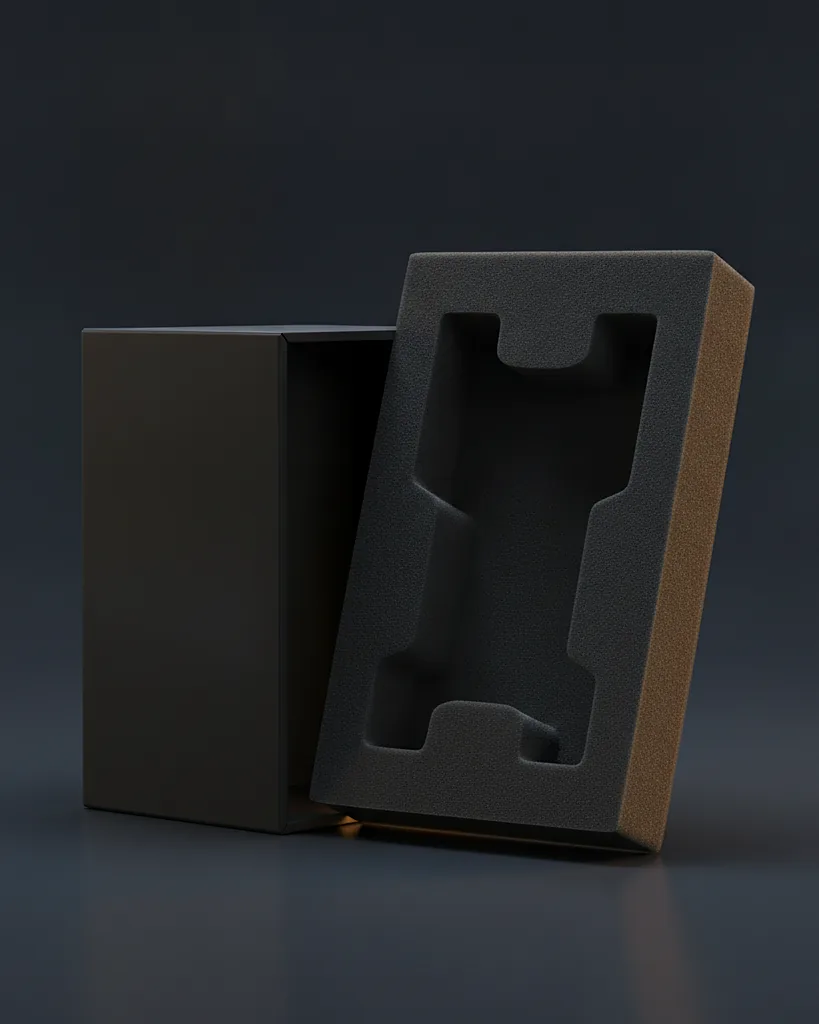
Inserts do one of two jobs: they stop the product moving, or they shape what the customer sees when the lid lifts. Foam, molded pulp, corrugated and die-cut paperboard inserts do the first; printed tissue, ribbon, cards and stickers do the second, and crinkle filler sits in between as void fill. Tria makes all of these except crinkle filler, most from 200 units, so a good box usually needs one holding insert and one presentation layer.
The insert types at a glance
| Insert | Main job | Tria minimum | Lead time after proof | End of life |
|---|---|---|---|---|
| Foam (EVA or PE) | Holds with zero movement, absorbs a drop | 200 units | 10 to 14 business days | General waste |
| Molded pulp | Holds a shaped product with no plastic | 200 units, plus tooling | 10 to 14 business days after tooling | Mixed paper recycling |
| Die-cut paperboard | Holds position and presents, printable | 200 units | 10 to 12 business days | Recycles with the box |
| Corrugated | Holds heavier items in a mailer or shipper | 200 units | 10 to 12 business days | Recycles with the box |
| Printed tissue | Hides the product, creates the reveal | 200 sheets | 10 to 12 business days | Check local paper rules |
| Printed ribbon | Ties, pulls and closures | 500 yards | 10 to 12 business days | Depends on fiber |
| Crinkle filler | Void fill and light cushioning | Not made by Tria | Buy as stock | Paper crinkle recycles as paper |
Holding inserts: pick by weight and fragility
A die-cut paperboard insert is the default for light products in cartons and rigid boxes: no tool cost, printable, recyclable. A corrugated insert does the same job in a mailer for heavier goods. A molded pulp insert holds bottles, jars and devices under about 3 pounds with no plastic, at the cost of a one-time tool. A foam insert in EVA or PE is for heavy glass and high-value items that must not move at all. We do not cut polyurethane foam.
The two comparison guides go deeper: molded pulp vs foam and paperboard vs foam.
Presentation layers: tissue, ribbon, cards and stickers
Tissue. Our printed tissue paper is 17 gsm acid-free tissue, white or kraft, printed one or two colors in water-based ink. Size the sheet at about twice the box length plus twice its height so it folds fully over the product. Tissue adds nothing to protection; it is there for the reveal.
Ribbon. Printed ribbon carries your logo along the length, from 500 yards in one color. If you only need a plain satin pull or tie on a rigid box, stock ribbon from our ribbon and closure hardware line is faster and has no print minimum.
Cards and stickers. A thank you card on top is the first thing read. A sticker from a sticker and label sheet closes the tissue and doubles as a seal.
Crinkle filler
We do not make crinkle filler; it is a stock item and you will get better value buying it by the case. Use paper crinkle rather than plastic if the rest of the box recycles, so you do not undo the claim with the filler. Put it under and around the product, never as the only protection for anything breakable.
How to layer a box
- Holding insert, or a bed of crinkle filler, in the base.
- The product, seated in its cavity or on its platform.
- Tissue folded over the product.
- A sticker closing the tissue.
- A card on top, face up, where the lid lifts.
Paper-based inserts recycle with the box; foam does not. If you plan to print a recycling or plastic-free line, check every layer against our eco packaging claims guide first.
What to send for a quote
- The product's dimensions and weight, or a sample.
- The box it goes in, ours or yours.
- How it ships: on its own, or inside an outer carton.
- Quantity, and any brand rule such as no plastic.
Questions people ask
Does every box need an insert?
No. If the product fills the box snugly and is not fragile, tissue alone is enough. Add a holding insert when the product can slide, rattle or knock against the walls, or when it is glass, a device or part of a set that must arrive in order.
Do you sell crinkle filler?
No, we do not make crinkle filler. It is a stock item best bought by the case. We do make the inserts, tissue, ribbon, cards and stickers that go with it, and we will size a holding insert so you need less filler.
Tissue or crinkle filler: which should I use?
They do different jobs. Crinkle filler fills space and cushions lightly in transit. Tissue wraps over the product and creates the reveal, and adds nothing to protection. Many boxes use both: filler underneath, product on top, tissue folded over and closed with a sticker.
What is the cheapest way to stop a product rattling?
A die-cut paperboard insert in a carton or rigid box, or a corrugated insert in a mailer. Both have no tool cost, start at 200 units and recycle with the box. Move to foam or molded pulp only when the product is fragile or heavy.
Which insert guide should I read next?
Read molded pulp vs foam insert if you are choosing between plastic-free and maximum protection, paperboard vs foam if the product sits in a carton or rigid box, and the printed tissue paper guide for sheet sizes and pattern design. This page is the overview.