Packaging for ecommerce returns: what reseals and what to specify
Returns-ready packaging opens without being destroyed, closes again securely and has a flat panel for a return label. On a corrugated mailer box that means a tuck-in lid with side locks and no tear strip, so the customer can repack and tuck it shut; on a poly or compostable mailer it means a second peel and seal strip for the trip back. Pick the feature at the quote stage, because it is part of the dieline, not something added later.
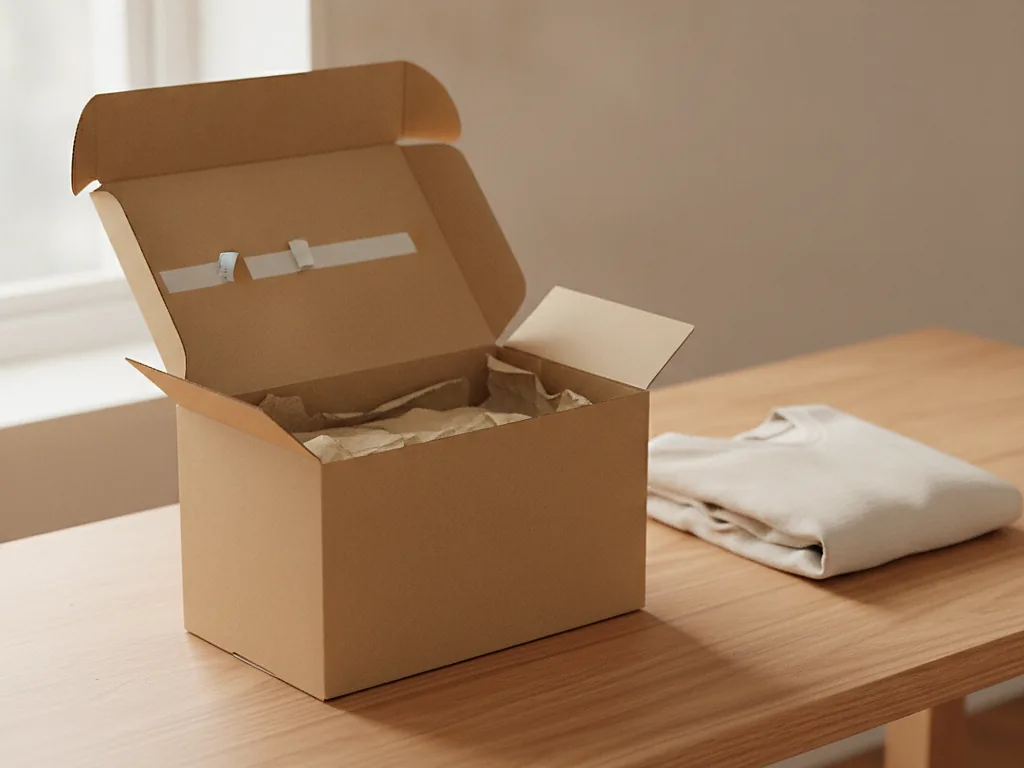
Why one-way packaging costs you on the way back
Most ecommerce packaging is designed for one trip. The customer tears the box or bag open, and when the item has to go back, they stuff it in whatever they have, tape it shut with household tape, or ask you for a return bag. Every one of those outcomes is worse for you than packaging that handles the return on its own: more support contacts, more items arriving scuffed or crushed, and more time at your returns bench sorting out what can be resold.
The fix is rarely a new box style. It is the closure you choose and whether the outbound box can be opened without being wrecked.
Return features compared
| Feature | What it does | Good for returns? | Where we offer it |
|---|---|---|---|
| Tuck-in lid with side locks | Closes by folding the lid flap into the front; opens and closes many times | Yes. The customer repacks and tucks it shut; a strip of tape adds security | Kraft, white and apparel mailer boxes |
| Tear strip | A perforated strip the customer pulls to open the box cleanly | Opens cleanly, but once pulled the lid will not tuck shut on its own, so the return needs tape | Optional on our mailer boxes and the subscription box |
| Second peel and seal strip | A second adhesive strip under a release liner, used to reseal the bag for the return | Yes, the simplest return closure there is | Optional on the poly mailer and compostable mailer |
| Tear strip across a mailer bag | Opens the bag along a perforated line instead of a ripped seam | Yes, when paired with a second strip | Optional on the poly mailer |
| Taped flaps (RSC) | Four flaps sealed with tape | Works if the customer has tape and cuts it cleanly; easy to damage with a knife | Corrugated shipping box |
| Return instructions printed inside | Tells the customer how to repack and where the label goes | Cuts support questions | Inside print on any of our printed mailers |
Mailer boxes: the tuck lid is the reseal
Our corrugated mailers close with a tuck-in lid and side locking tabs, not an adhesive strip. That is good news for returns. A tuck lid opens without a knife and closes the same way it did at your packing bench, so the box goes back in the shape it arrived in. The customer adds a strip of tape across the front tuck if they want extra security, and the label goes on the lid.
The thing that works against returns on a mailer box is the tear strip. It is great for a subscription box opened every month, because the customer gets in without a blade. But once the strip is pulled, the front edge of the lid is gone and the box will not tuck shut. That is why we recommend a tear strip on an apparel mailer only if the box will not be resealed for returns. If you sell clothing with free exchanges, skip the tear strip.
Mailer bags: the second strip does the work
On a poly mailer or a compostable mailer, the return feature is a second peel and seal strip. You seal the bag with the first strip when you pack it. The customer opens it along the top or along a tear strip, and when they send it back, they peel the second liner and seal it again. No tape, no extra bag. The poly mailer also takes a returns message printed on the back, which is a sensible place for the instructions.
Bags suit soft goods: apparel, textiles and anything that does not need crush protection. For anything that can break or bend, use a box both ways.
The label panel and carrier basics
Carriers treat a return like any other parcel. In practice that means three things. The closure has to hold for the whole trip. There has to be a flat, clear area for a 4 by 6 inch shipping label, which on a heavily printed or laminated mailer is worth reserving on the dieline. And the box has to be in good enough shape to protect the item again, which is the strongest argument for a closure the customer does not have to tear.
What to put in your quote request
- Say that returns are expected, and roughly how often, so we can recommend the closure.
- For mailer boxes, say whether you want a tear strip. For apparel and footwear with free exchanges, usually not.
- For poly or compostable mailers, ask for the second peel and seal strip.
- Mark a clear label area on the outside if the design is full coverage.
- Add return instructions to the inside print or a printed card.
For choosing between a mailer and a shipping box in the first place, see mailer box vs shipping box.
Questions people ask
What makes packaging return-friendly?
Three things. It opens cleanly, so the customer can repack the product. It closes again securely for the trip back. And it has a flat area for a return label. On our mailer boxes the tuck-in lid does the first two; on our poly and compostable mailers a second peel and seal strip does it.
Do you put peel and seal strips on corrugated mailer boxes?
Our corrugated mailer boxes close with a tuck-in lid and side locking tabs rather than an adhesive strip. The tuck lid reseals by design, which is why it works well for returns. The second peel and seal strip for returns is offered on our poly mailer and compostable mailer.
Should I add a tear strip if I expect returns?
Usually not. A tear strip opens the box cleanly, but once it is pulled the lid will not tuck shut on its own and the customer needs tape. For subscription boxes that are rarely returned it is a good feature; for apparel with free exchanges, leave it off.
Do I need different packaging for returns than for outbound shipping?
Not if the outbound packaging is chosen with returns in mind. A tuck-lid mailer box or a mailer bag with a second strip goes out and comes back in the same package. Sending a separate return bag inside every order works too, but it adds material, weight and packing time.
What do carriers need on a return shipment?
The same as any parcel: a closure that holds in transit, a flat area for the label and packaging that still protects the item. A box that was torn open and taped back together often fails the third test, which is the reason to choose a closure that does not need tearing.